Why the Same Plyo Workout Feels So Much Harder on Concrete Than on Grass
Quick Answer: Harder surfaces like concrete return less of the landing force back into the ground and transmit more of it directly through the joints, while softer surfaces like grass or a sprung gym floor absorb more of that force themselves — which means an identical jump height and landing technique can produce a meaningfully different joint impact load depending purely on what’s underneath you.
It’s not your imagination and it’s not worse technique — the same plyo set genuinely loads your knees and ankles differently on concrete than it does on grass, and that difference is measurable, not just a feeling.

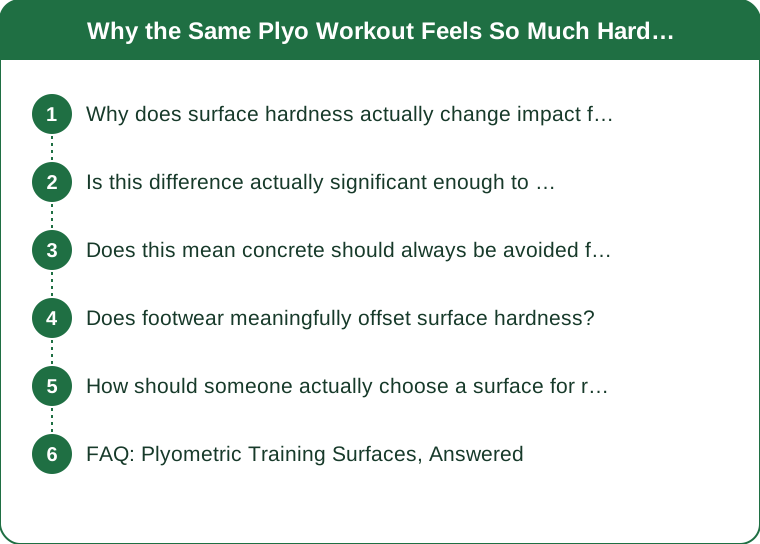
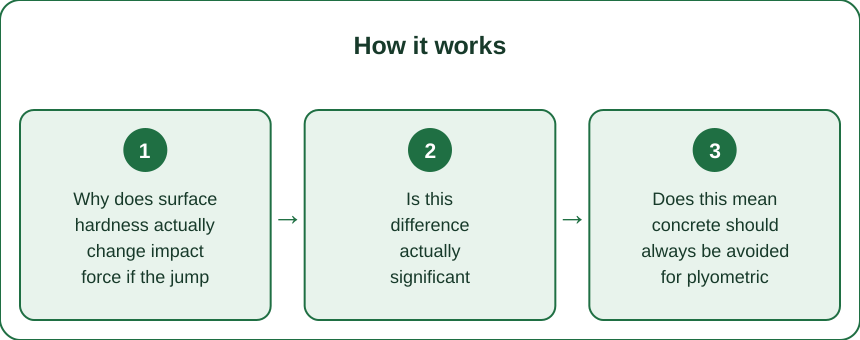
Why does surface hardness actually change impact force if the jump itself is identical?
Ground reaction force during landing depends partly on how much the surface itself deforms and absorbs energy versus how rigid it is — a hard, unforgiving surface like concrete deforms very little, meaning more of the landing energy has to be absorbed by the body’s own joints and soft tissue, while a softer surface shares some of that absorption job with the ground itself.
Is this difference actually significant enough to matter for training, or is it minor?
For repeated plyometric loading specifically, it’s considered meaningful — plyometric training already involves higher-than-normal impact forces by design, and doing high-volume plyo work on the hardest available surface compounds that impact rather than the surface sharing any of the load, which is part of why many training guidelines specifically address surface choice for jump training.
Does this mean concrete should always be avoided for plyometric work?
Not entirely — occasional plyo work on a harder surface isn’t inherently dangerous for a well-conditioned person, but consistently high-volume plyometric training on concrete increases cumulative joint stress compared to training on grass, a sprung floor, or proper matting — the concern scales with both surface hardness and total training volume together, not either factor alone.

Does footwear meaningfully offset surface hardness?
Partially — cushioned athletic shoes absorb some landing force regardless of surface, which helps on any surface, but shoe cushioning generally can’t fully substitute for the energy-absorbing effect of a genuinely softer training surface — the two factors (shoe cushioning and ground surface) stack, they don’t replace one another.
How should someone actually choose a surface for regular plyo training?
A sprung gym floor, rubber flooring, or grass are generally preferred over concrete or asphalt for regular plyometric training, particularly for higher-volume or higher-intensity jump work — reserving harder surfaces for lighter, lower-volume plyo sessions is a reasonable middle ground if a softer surface genuinely isn’t available.
FAQ: Plyometric Training Surfaces, Answered
Is sand actually a good plyo surface, or is it too unstable?
Sand absorbs impact very well but adds instability that changes the movement pattern significantly, so it’s generally considered a different training stimulus rather than a straightforward substitute for a firmer soft surface like grass.
Does surface choice matter as much for lower-intensity plyo like small hops as for max-effort box jumps?
Surface impact matters less at lower intensities since ground reaction forces are smaller overall, so surface choice becomes more important as jump height and intensity increase.
Should beginners avoid concrete entirely when starting plyometric training?
Many coaches recommend beginners specifically prioritize a softer surface while still building landing mechanics and joint conditioning, since technique errors combined with a hard surface compound injury risk more than either factor alone.
TL;DR:
- Harder surfaces absorb less landing energy, meaning more impact force transfers through your joints
- Plyometric training’s already-high impact demands make surface choice matter more than for regular exercise
- Occasional hard-surface plyo isn’t inherently dangerous, but high-volume work compounds the added stress
- Cushioned shoes help but don’t fully replace the energy absorption a genuinely softer surface provides
Same jump, same height, different joints — choosing grass, a sprung floor, or rubber matting over concrete for regular plyo work is a low-effort way to meaningfully reduce cumulative impact.
Keep Reading
This article is for general informational and styling purposes only. Fit, sizing, and product availability may vary.