Why Your Shoes Change Jump Training More Than Your Program Does
Quick Answer: Shoe midsole thickness and softness change how long your foot stays on the ground and how much force your own tissues absorb. A soft, high-stack running shoe lengthens ground contact and hides sloppy landings; a firm, low-stack trainer shortens contact and exposes them. For reactive jump work — hops, pogos, low box work — a firm sole with a stack under about 20mm gives you better feedback. For high-impact volume, some cushion is reasonable. Changing your shoes will change your session more than adding a set will.
You can run a perfectly designed plyometric progression in the wrong shoe and get almost none of the adaptation you were chasing.
And the shoe most people wear for jump training is the exact one that works against it.
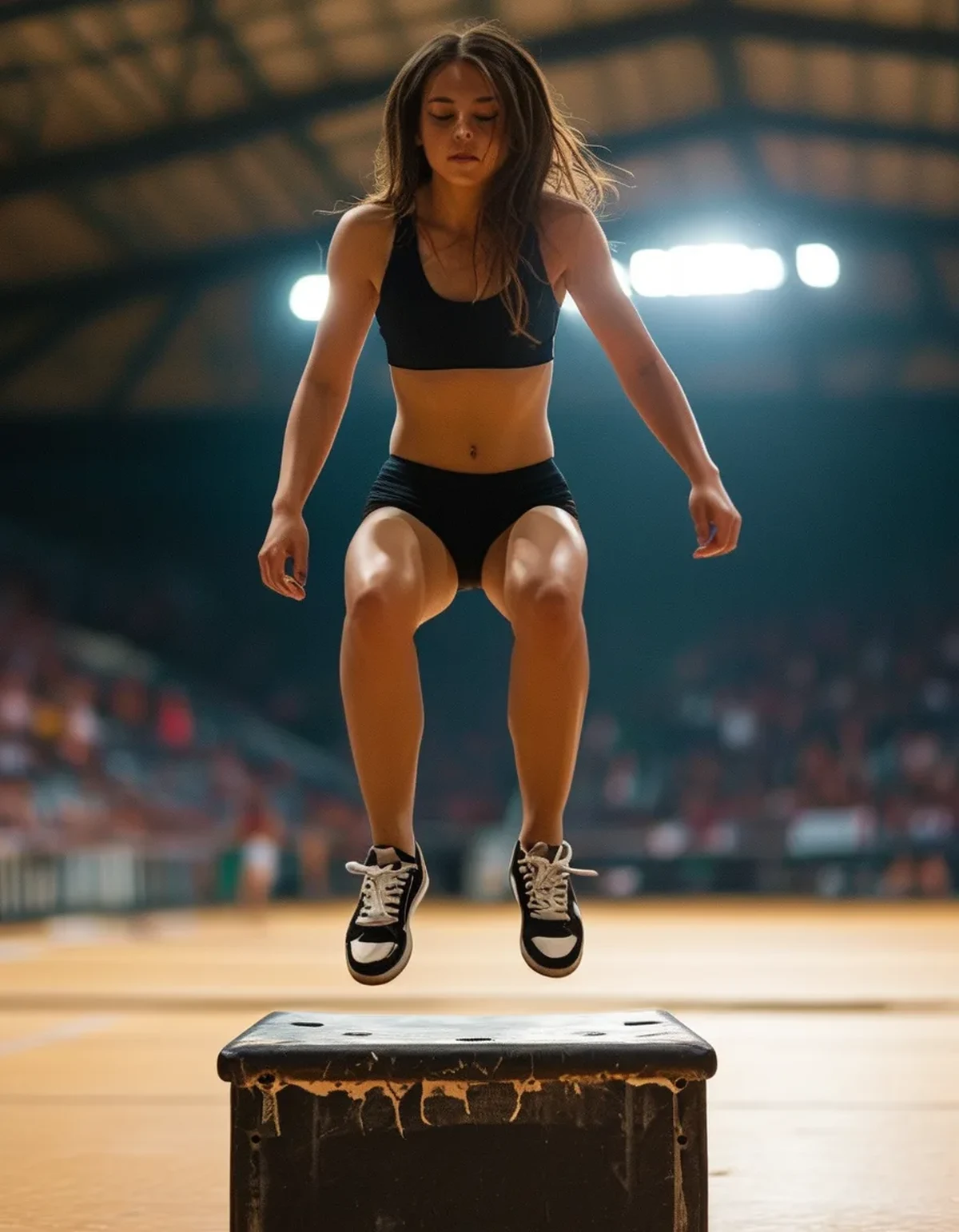
How much does a shoe actually change a jump?
More than the programming does, at the level of the individual contact.
Every jump has a ground contact time — the window between your foot touching down and leaving again. Fast reactive work lives in the under-250-millisecond range. Slower strength-biased jumps sit above that. The soft foam in a modern running shoe compresses under load and takes time to rebound, and that compression adds milliseconds to every single contact.
Add 30 or 40 milliseconds to a 200-millisecond contact and you have not just made the jump slower. You have moved it into a different training category. The set on paper says pogo hops. The set your nervous system experiences is a series of small squat jumps.
The programming variable you spent an hour choosing was overridden by the shoe you grabbed on the way out the door.
Why do cushioned shoes make landings feel safer and train them worse?
Because cushion removes the information you were supposed to be learning from.
A firm sole transmits the landing to you. You feel the slap, you hear the noise, you notice the moment your knee drifts inward. That feedback is what drives the correction — most people quieten their own landings within two or three sessions simply because they can hear them.
Thick foam absorbs that. The landing feels soft, sounds muffled, and gives you almost no signal about whether you controlled it or collapsed into it. Your muscles do less work because the foam did some of it, and the pattern you rehearse is a slightly lazier version of the one you wanted.
This matters most for beginners, who need the feedback most and are usually the ones training in maximal-cushion shoes.
Comfort during the set is not the same as quality of the set.
What about barefoot or minimal shoes for plyometrics?
They are excellent feedback tools and a poor place to start volume.
Minimal shoes give you the clearest possible signal. Your foot works, your calf works, and a bad landing is impossible to ignore. That is genuinely useful — but the tissues that suddenly have to do the absorbing (calf, Achilles, plantar fascia, the small foot muscles) have usually spent years in cushioned shoes and are not ready for 100 contacts of it.
A sane approach looks like this:
- Start with 10 to 20 low-amplitude contacts in minimal shoes at the beginning of a session, while you are fresh
- Keep them for skill work — pogos, ankle hops, landing practice
- Do the higher-volume or higher-box work in a firm trainer
- Add roughly 10 percent more minimal-shoe contacts per week, not double
The most common minimal-shoe injury is not a dramatic one. It is a calf that gets progressively tighter over three weeks until something in the Achilles complains.
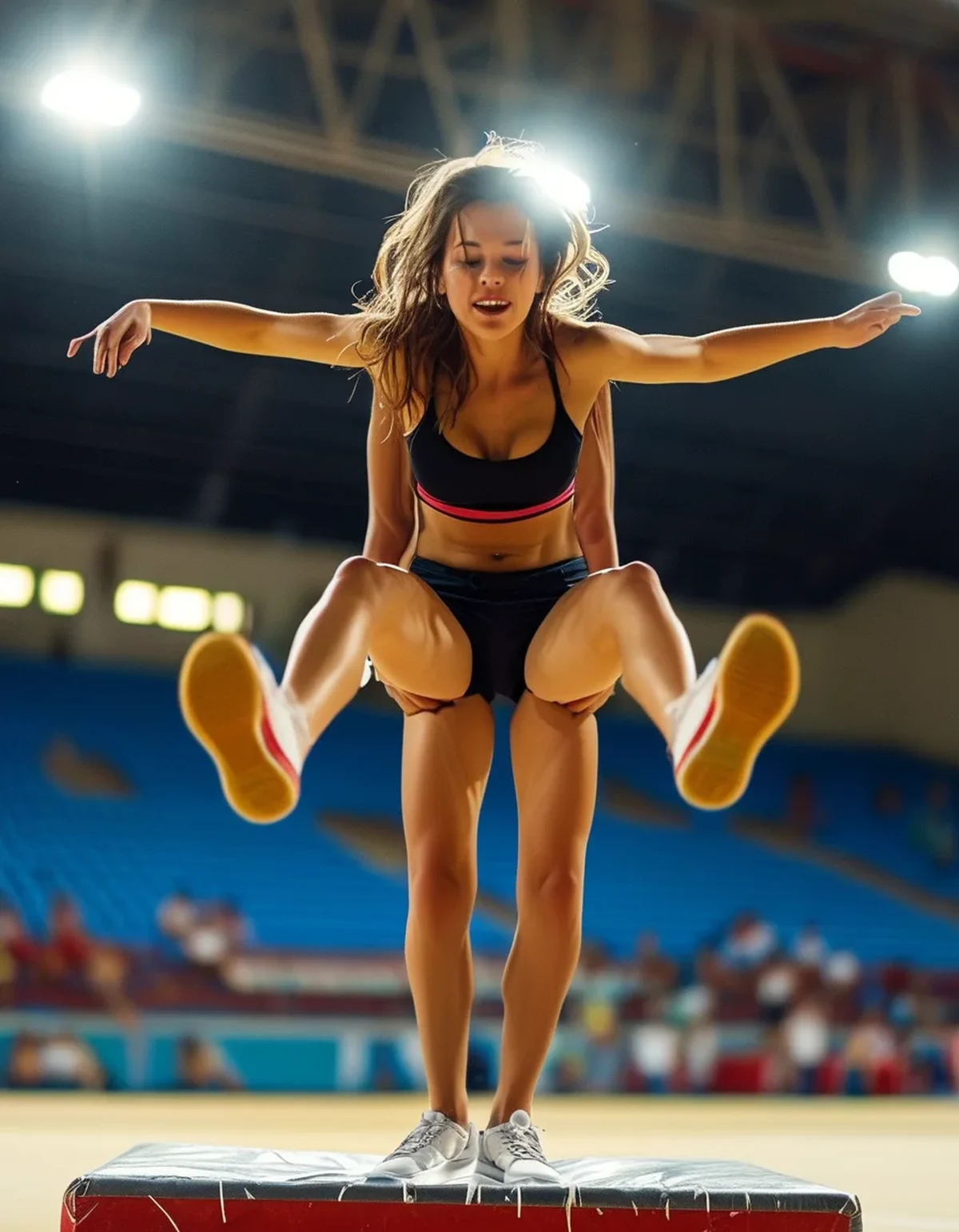
Myth vs Fact: Cushioning and Jump Training
Myth: More cushioning means fewer injuries in jump training.
Fact: Cushioning changes where the load goes, not how much of it there is. Softer shoes reduce peak pressure under the foot but often increase joint loading further up the chain, because the landing takes longer and the knee spends more time absorbing. Injury risk in plyometrics tracks with volume, surface, and landing quality far more reliably than with shoe softness.
Myth: A shoe designed for running is fine for jumping.
Fact: Running shoes are built for a rolling heel-to-toe contact, not a flat two-foot landing. Many have a raised, narrow heel that is genuinely unstable in a lateral hop.
Myth: Cross-trainers are a compromise, so they are worse at everything.
Fact: For jump work they are usually the correct answer. A flat, firm, wide-based trainer is the boring, right choice — and the third mistake on most people’s list is assuming boring means suboptimal.
How should you actually pick a shoe for jump work?
Four things, in order of how much they matter.
1. Firmness. Press your thumb into the midsole. If it sinks easily, it will sink under a landing. You want it to resist.
2. Stack height. Lower puts your ankle closer to the ground and makes lateral landings more stable. Under 20mm at the heel is a reasonable target for reactive work.
3. Base width. Look at the shoe from behind. A wide, flat platform under the heel is what stops the small side-to-side wobble on single-leg landings.
4. Drop. A lower heel-to-toe drop asks more of the calf and Achilles. That is fine, as long as you did not change it in the same week you added jump volume.
One change at a time. If you switch shoes, hold your volume flat for two weeks before you add anything else.
FAQ: Plyometric Footwear Questions, Answered
Can I just do plyometrics in socks on a wooden floor?
For low-amplitude skill work, yes, and the feedback is superb. Keep it to 10 to 20 contacts and avoid it entirely on a hard, unforgiving surface like tile or concrete. Socks also slide, which is a genuine issue on any lateral movement.
Do weightlifting shoes work for jumping?
No. The raised, rigid heel is designed to change your squat position, and it puts your ankle in a poor place to absorb a landing. Save them for the barbell.
How often should I replace shoes I use for jump training?
Go by feel, not mileage. When the midsole stops resisting your thumb and the landings start feeling mushy, the shoe is no longer doing the job you bought it for. For a shoe used two or three times a week for jump work, that is often eight to twelve months.
This is general information, not medical advice. If you have a history of Achilles or plantar problems, change footwear gradually and get individual guidance.
TL;DR:
- Midsole softness changes ground contact time, which changes what the jump actually trains
- Cushioning removes the landing feedback that fixes your technique fastest
- Minimal shoes are a great skill tool and a bad place to put volume
- A flat, firm, wide-based trainer under 20mm stack is the boring correct answer for most jump work
If your jump sessions have felt flat for a while and you have already fiddled with sets, rest, and box height, look down. The variable you have never changed is the one sitting between you and the floor, and it is quietly deciding what every single contact teaches you.
Keep Reading
This article is for general informational and styling purposes only. Fit, sizing, and product availability may vary.