How to Warm Up Properly Before Plyometrics (So You Don't Get Hurt)
Quick Answer: A proper plyometric warmup needs general cardio, dynamic mobility work, and low-intensity jump progressions in that order — skipping straight from static stretching or a light jog into max-effort box jumps is one of the more common causes of plyometric-related injury.
You’ve jogged for five minutes and gone straight into jump squats before. It felt fine that day, but tendons and connective tissue don’t announce they’re underprepared until they actually get hurt.

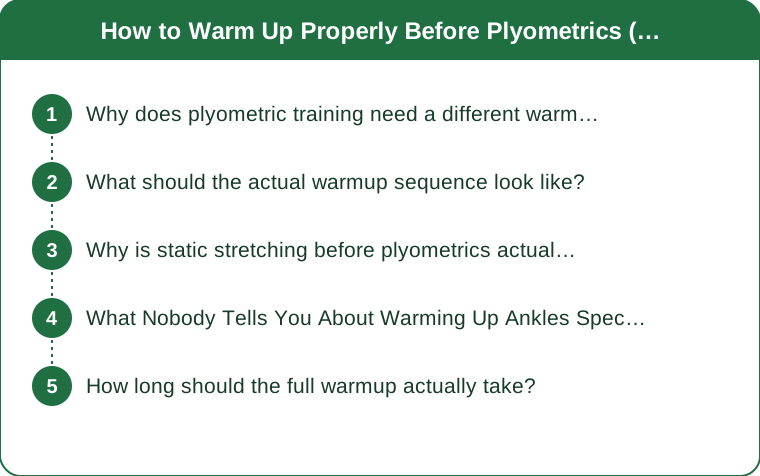
Why does plyometric training need a different warmup than regular cardio?
Plyometrics rely on the stretch-shortening cycle — tendons and muscles rapidly loading then explosively releasing energy — which places significantly more demand on connective tissue than steady-state cardio. Tendons specifically need a longer, more progressive warmup to increase elasticity and reduce injury risk, since they don’t respond to warmup as quickly as muscle tissue does.
A warmup adequate for a jog is genuinely not adequate for jump training, even if your muscles feel warm.
What should the actual warmup sequence look like?
Start with 5 minutes of general cardio (light jogging, jump rope at low intensity) to raise core temperature and blood flow. Follow with dynamic mobility work targeting ankles, knees, and hips — leg swings, walking lunges, ankle circles — rather than static stretching, which can temporarily reduce explosive power output if done right before jumping.
Finish with low-intensity jump progressions: pogo hops, small line jumps, and skips before moving to the actual plyometric session’s higher-intensity movements.

Why is static stretching before plyometrics actually counterproductive?
Research consistently shows static stretching held for long durations immediately before explosive activity can temporarily reduce muscle power output and reaction speed — the opposite of what you want heading into jump training. This doesn’t mean stretching is bad generally, just that the timing matters.
Save static stretching for after the session, or for a separate mobility-focused day, and use dynamic movement to prepare for plyometric-specific demands instead.
What Nobody Tells You About Warming Up Ankles Specifically
Ankle stability is disproportionately important in plyometric injury prevention compared to how much attention it typically gets in warmups — most people warm up knees and hips through lunges and swings but skip specific ankle prep entirely. Simple pogo hops and ankle circles specifically activate the lower-leg stabilizers that absorb a huge share of landing force.
A few minutes of ankle-specific prep before jump training addresses a genuinely common and underrated injury risk area.
How long should the full warmup actually take?
A thorough plyometric warmup generally runs 10-15 minutes — shorter than that tends to under-prepare tendons for the demands ahead, especially for higher-intensity box jumps or depth jumps. This isn’t wasted time before the ‘real’ workout; it’s functionally part of injury prevention for a training style with genuinely higher impact forces than most other exercise types.
This is general fitness guidance, not medical advice — anyone returning from a lower-body injury should get clearance before resuming plyometric training specifically, given its higher joint and tendon demand.
TL;DR:
- Plyometrics need a longer, more progressive warmup than regular cardio due to tendon demands
- Sequence: general cardio, then dynamic mobility, then low-intensity jump progressions
- Save static stretching for after the session — it can temporarily reduce explosive power beforehand
- Don’t skip ankle-specific prep; it’s an underrated piece of landing-force absorption
A rushed warmup is one of the more preventable causes of plyometric injury — the 10-15 minutes upfront genuinely changes your risk for the session ahead.
Keep Reading
This article is for general informational and styling purposes only. Fit, sizing, and product availability may vary.