Counting Ground Contacts: the Plyometric Volume Rule That Prevents the Classic Overuse Spiral
Quick Answer: Plyometrics are dosed in ground contacts — each jump landing counts one — because landings, not effort or minutes, are what tendons and joints must absorb. Beginner guideline: 50-80 contacts per session, 2 sessions weekly, on 48+ hours rest; intermediate 80-120. The classic mistake is treating plyo like cardio (‘20 minutes of jump circuits’ = 300+ uncounted contacts) — which is why plyo injuries are overwhelmingly volume errors, not exercise errors.
Nobody would program ‘bench press for 20 minutes, whatever total happens.’ But jump training gets exactly that treatment in circuit classes and follow-along videos — and the tissue receiving those uncounted landings keeps a ledger of its own, payable in shins and knees three weeks later.

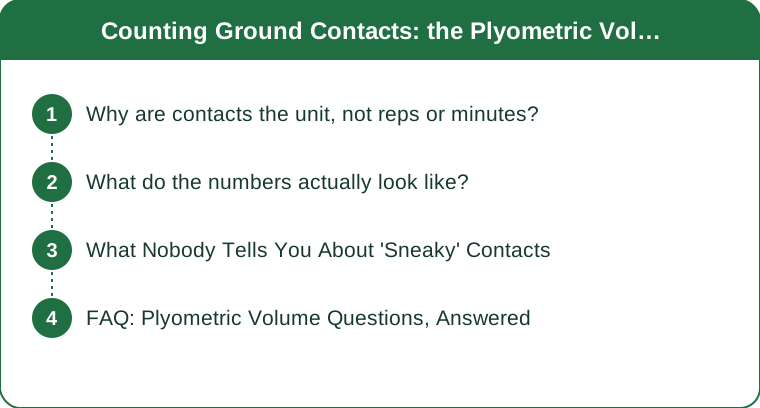
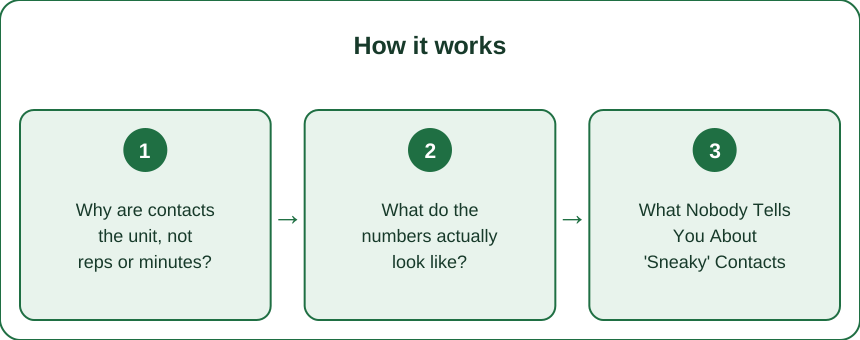
Why are contacts the unit, not reps or minutes?
Because the defining stress of plyometrics is the landing — each ground contact loads tendons and joints with several times bodyweight in a fraction of a second. That impact-absorption event is both the training stimulus (teaching tissues to store and return energy) and the injury vector when overdosed. So the contact is the dose unit; everything else is packaging.
Why minutes lie: a ‘20-minute plyo circuit’ at even a modest pace racks 250-400 contacts — 3-5x a sensible beginner session — while feeling merely ‘like a workout,’ because cardiovascular fatigue and tissue load are different meters. Your lungs recover by tomorrow; tendon structures adapt on a days-to-weeks clock, which is exactly the mismatch that builds shin splints, patellar tendon grumpiness, and the classic week-3 plyo breakdown.
The professional framing worth stealing: plyo is neuromuscular skill work with an impact budget — trained fresh, counted precisely, stopped while quality is high. It just happens to also be fun, which is how it keeps getting smuggled into conditioning circuits at 4x the safe dose.
What do the numbers actually look like?
Counting: every landing = 1 contact per… event, not per foot: a box jump = 1, a bounding stride = 1 per landing, jump rope = 1 per hop (which is why rope racks up 100+ per minute — it’s low-intensity per contact, but it counts).
Session budgets (field-standard ranges):
- True beginner (first 4-6 weeks): 50-80 contacts, low-intensity variants (small hops, low box step-off landings, jump rope blocks), 2x weekly.
- Intermediate: 80-120 contacts, moderate intensity (box jumps, bounds, hurdle hops).
- Advanced: 120-140+, including high-intensity (depth jumps — which cost ‘double’ in fatigue terms and belong only atop a strength base).
- Spacing: 48-72 hours between plyo sessions; never stacked after heavy leg days when quality is already spent.
The quality gate that overrides all counts: plyo sets end when landings degrade — louder contacts, longer ground time, knees drifting in. A quiet landing is the audit: if you can hear your landings getting louder, the session is over regardless of the budget remaining. Contacts left in the tank cost nothing; contacts spent on breaking form buy exactly the adaptations you didn’t want.

What Nobody Tells You About ‘Sneaky’ Contacts
The budget only works if everything lands in the ledger — and most people’s week is full of uncounted plyo:
- HIIT classes: burpees, jump squats, mountain climbers, high knees — a typical class runs 200-400 contacts. That’s not ‘cardio plus your plyo program’; that’s two plyo sessions, one of them unplanned.
- Jump rope warm-ups: 3 casual minutes ≈ 300+ low-grade contacts before the session even starts.
- Sports: basketball, volleyball, tennis — games are plyometric events wearing a fun costume. A weekend league night is a full contact budget by itself.
This is the actual mechanism of most ‘mysterious’ overuse flare-ups: no single session was crazy, but the weekly contact total — classes + sport + program — quietly tripled what any coach would prescribe. The fix is a weekly-lens count: tally all jump-adjacent activity, then size the formal plyo sessions to fit what’s left. Some weeks the right plyo program is zero extra contacts, because Tuesday’s class and Thursday’s volleyball already spent the budget.
Sharp pain, persistent shin or tendon soreness that outlasts 48 hours, or pain that warms up then returns worse — that’s the ledger overdrawn, and it’s rest-and-professional territory, not push-through territory. This is general information, not medical advice.
FAQ: Plyometric Volume Questions, Answered
Do I need plyo at all if I’m not an athlete?
Modest doses earn their place for almost everyone: bone density stimulus, tendon resilience, and the power quality that ages fastest without training. ‘Non-athlete plyo’ looks like 40-60 low-intensity contacts twice weekly — hops, skips, low bounds — not depth jumps off boxes.
Is jump rope plyo or cardio?
Both, which is the trap and the tool: per-contact intensity is low (great entry-level stimulus), but volume explodes (100+/minute). Count it in the weekly ledger, and use short blocks (30-60 seconds) rather than 10-minute sessions when you’re also running a plyo program.
What strength base do I need before higher-intensity plyo?
Common guideline territory: comfortable full-depth squats with good control, single-leg stability (10 clean single-leg quarter-squats per side), and pain-free moderate hopping. The classic benchmark of squatting your bodyweight before depth jumps is conservative but honest — depth jumps are the one plyo category with real entry requirements.
TL;DR:
- The landing is the dose: count ground contacts, never minutes — 50-80/session beginner, 80-120 intermediate, 2x weekly on 48h+ rest
- ‘20-minute jump circuits’ = 300+ uncounted contacts — plyo injuries are volume errors wearing exercise costumes
- Audit by ear: landings getting louder ends the session, budget or not
- Count the sneaky contacts — HIIT classes, jump rope, weekend sports — in one weekly ledger
The tissue was keeping count the whole time — the upgrade is you keeping it first. This is general information, not medical advice.
Keep Reading
This article is for general informational and styling purposes only. Fit, sizing, and product availability may vary.