Why Plyometric Soreness Often Peaks Two Days Later Instead of the Next Morning
Soreness from a plyometric session often doesn’t peak the next morning the way it does after many other workouts — it frequently peaks a full two days later instead, and that specific delay traces back to the particular kind of muscle loading that jump landings involve.

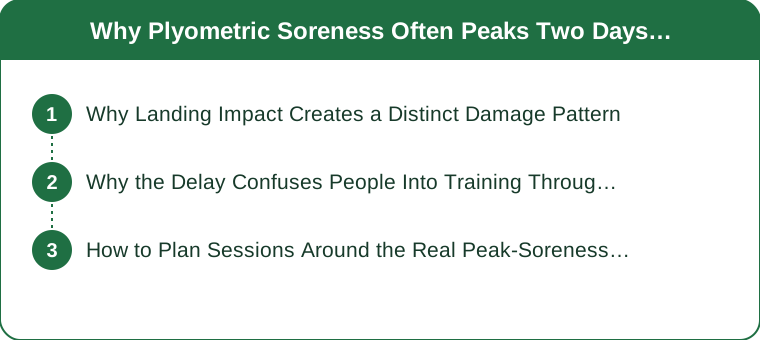
Why Landing Impact Creates a Distinct Damage Pattern
The mechanism: the-eccentric-braking-force-absorbed-during-a-jump-landing-creates-microscopic-muscle-fiber-damage-that-triggers-an-inflammatory-repair-response-with-its-own-separate-timeline (the eccentric braking force absorbed specifically during a jump landing creating microscopic muscle fiber damage that triggers a distinct inflammatory repair response, one that runs on its own separate timeline from simple next-day fatigue, per the plyometrics-at-home-guide logic — the-eccentric-braking-force-absorbed-during-a-jump-landing-creating-microscopic-muscle-fiber-damage-that-triggers-a-distinct-inflammatory-repair-response-running-on-its-own-separate-timeline), and the reframe (landing force producing a slower, different kind of damage than the exertion itself)).

Why the Delay Confuses People Into Training Through It
The trap: feeling-fine-the-next-morning-leads-people-to-assume-recovery-is-complete-and-train-hard-again-right-before-the-actual-soreness-and-tissue-vulnerability-peaks (feeling essentially fine the next morning leads many people to assume recovery is already complete, and to train hard again right before the actual soreness and tissue vulnerability peaks two days out, per the plyometric-progressions-guide logic — feeling-essentially-fine-the-next-morning-leads-many-people-to-assume-recovery-is-already-complete-and-to-train-hard-again-right-before-actual-soreness-and-vulnerability-peaks), and the frame (the quiet first day being mistaken for the all-clear signal)).
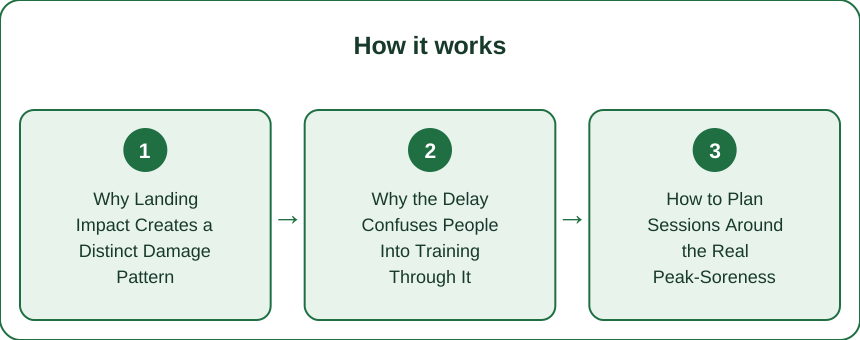
How to Plan Sessions Around the Real Peak-Soreness Window
The plan: space-hard-plyometric-sessions-at-least-forty-eight-to-seventy-two-hours-apart-to-align-recovery-with-the-actual-delayed-peak-rather-than-the-next-morning-feeling (spacing hard plyometric sessions at least forty-eight to seventy-two hours apart, specifically to align recovery time with the actual delayed soreness peak rather than with how legs happen to feel the next morning, per the safe-landing-plyometrics-guide logic — spacing-hard-plyometric-sessions-at-least-forty-eight-to-seventy-two-hours-apart-to-align-recovery-time-with-the-actual-delayed-soreness-peak-rather-than-with-next-morning-feeling), and the frame (scheduling around the known damage timeline instead of a misleading early feeling).
The eccentric braking force absorbed specifically during a jump landing creates microscopic muscle fiber damage that triggers a distinct inflammatory repair response running on its own separate timeline, which is why feeling fine the next morning often leads people to train hard again right before soreness and tissue vulnerability actually peak two days out. Spacing hard plyometric sessions at least forty-eight to seventy-two hours apart aligns recovery time with that real delayed peak rather than with a misleading next-morning feeling.
Keep Reading
This article is for general informational and styling purposes only. Fit, sizing, and product availability may vary.